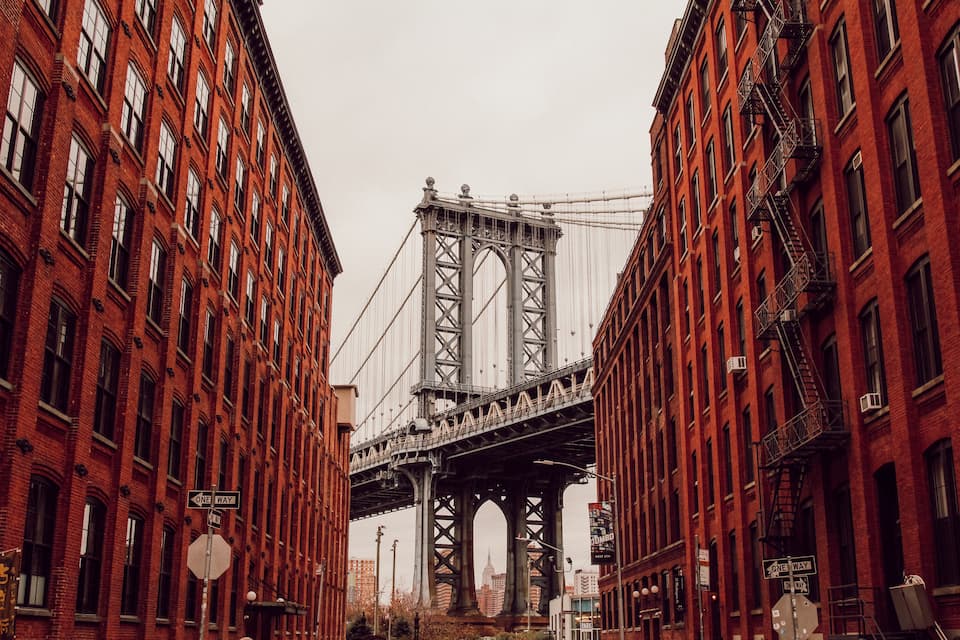
Understanding The Five Boroughs of New York City
Summary for those short on time: New York City contains five boroughs: Manhattan, Brooklyn, Queens, the Bronx, and Staten Island. Each borough functions as a county and holds distinct geography, culture, and population density.
Introduction
NYC is a big place. It spans an area of over 1,200 square kilometers, or around 470 square miles. There are five boroughs into which the city is split, including Manhattan, Brooklyn, Queens, Staten Island, and the Bronx.
In this post, we’re going to look at each borough and learn about it in detail.
Manhattan

Description
Manhattan is the most densely populated borough of New York City, known as its economic and commercial center. It is home to major landmarks like Times Square and the Empire State Building. Manhattan covers about 22.7 square miles and has over 1.6 million residents.
Population
Manhattan has around 1.6 million residents. According to Nyc.gov, the population of Manhattan grew at 1.7% between July 2023 and July 2024.
Major Neighborhoods
The major neighborhoods in Manhattan include Harlem, Upper East Side, Upper West Side, Midtown, Chelsea, Greenwich Village, SoHo, Tribeca, and Chinatown. Each area has a distinct architecture and atmosphere, with Uptown known for residential living and Downtown known for business and commerce.
Cost of Living
According to Rentcafe.com, the cost of living in Manhattan, NY, is significantly higher than both the state and national averages.
Overall, it stands 36% higher than the New York State average and a striking 131% higher than the national average.
Housing costs are the main driver, coming in at 67% higher than the state average and 401% higher than the national average, making rent and home ownership particularly expensive. Utilities are only 2% higher than the state average, while healthcare and transportation are 25% and 6% higher, respectively.
On average, a single person in Manhattan can expect to spend between $5,000 and $7,000 per month to maintain a moderate lifestyle, while a family of four may need $10,000 to $14,000 monthly, depending on housing and personal expenses.
Perks and Challenges
Here are the perks of living in Manhattan:
- Career opportunities
- Efficient transportation
- High quality of services
- Great and diverse food
- Walkability (no pressing need for a car)
- Green areas and recreation
Here are the challenges of living in Manhattan:
- High cost of living
- Limited space
- Noise and crowding
- Competitive job market
- Fast-paced lifestyle
- Limited privacy
- Traffic congestion
- High taxes
History
Manhattan has quite an eventful history. Its history begins with the Lenape people, who are also known as Delaware Indians. The Lenape people were an indigenous group of Native Americans who lived in the area spanning present-day Delaware, Pennsylvania, New Jersey, and some areas of New York.
The Lenape people called the place Manahatta, which meant “island of many hills.” Manahatta was first subjected to European settlement by the Dutch, who set up a trading post under the name “New Amsterdam” in 1624.
When the British took control of the area in 1664, King Charles II gave the lands to his brother, the Duke of York (who would later become King James II). From there, the name “New York” was given to the area.
Manhattan played a key role in the New York Campaign, which was a series of battles fought in the American Revolutionary War. It was occupied by the British but was evacuated in 1783, after which it became American territory.
In the 19th and 20th centuries, Manhattan (in fact, the entire NYC) became a commercial and economic hub in the USA, and it still holds that importance to this day.
Transportation Options
There are a number of transportation options in Manhattan that can be used for daily commutes.
- Subway system that is available 24/7
- Bus network with affordable fares
- A ferry system that connects the different boroughs
- Yellow taxis that allow easy road transportation
- Uber
- Lyft
Safety Statistics
In 2024, the crime rate in Manhattan was 18.1 crimes per 1,000 residents. This data is from Furmancenter.org. This makes Manhattan a relatively safe state compared to the national average.
Recreational Areas to Visit
Here are some recreational areas that you can visit in Manhattan:
- Central Park: Central Park is an 843-acre public park in Manhattan, New York City. It stretches from 59th to 110th Street and from Fifth Avenue to Central Park West. The park includes lakes, meadows, and walking trails.
- Bryant Park: Bryant Park is a 9.6-acre public park located in Midtown Manhattan, New York City. It sits between Fifth and Sixth Avenues and 40th to 42nd Streets, behind the New York Public Library. The park features open lawns, gardens, and cafés.
- Greenwich Village: Greenwich Village is technically a neighborhood, but it offers picturesque sights. The area features tree-lined streets, Washington Square Park, and other popular landmarks.
- Little Island: Little Island is a 2.4-acre public park built on the Hudson River in Manhattan, New York City. Opened in 2021, it sits near 14th Street and features elevated pathways, gardens, performance spaces, and scenic river views. The park rests on concrete tulip-shaped pillars above the water, which gives it a unique and captivating look.
If you are thinking about Moving to Manhatan Dumbo Movers has your back. It make settling into this energetic, fast-moving borough feel easy, smooth, and completely stress-free
Queens

Description
Queens, NYC, is one of New York City’s five boroughs, located on Long Island’s western edge. It borders Brooklyn, Nassau County, and the East River. Queens is known for its vibrant food scene, major airports (JFK and LaGuardia), and landmarks like Flushing Meadows–Corona Park and Citi Field.
Population
The population of Queens, New York, is approximately 2.3 million people as of 2025. Queens is the most ethnically diverse borough in New York City, representing over 190 nationalities and 160 languages. Its population has steadily increased due to international migration and urban development.
Major Neighborhoods
The major neighborhoods in Queens include Astoria, Long Island City, Flushing, Forest Hills, Jackson Heights, Jamaica, Bayside, and Rego Park. Each neighborhood offers unique characteristics, such as Astoria’s waterfront charm and dining options, Flushing’s vibrant Chinatown, and Forest Hills’ suburban feel with tree-lined streets and Tudor-style homes.
Cost of Living
According to Rentcafe.com, the cost of living in Queens, NY, is 12% lower than the New York State average but still 50% higher than the national average.
Housing remains the largest expense factor—18% lower than the state average, yet 145% higher than the national average, highlighting how real estate in Queens is still costly by national standards.
Utilities are 2% higher than the state average and 15% higher nationally, while healthcare costs sit 3% lower than the state average but 12% higher than the national figure. Transportation and goods & services are also 6% and 9% lower than the state average, respectively, though 4% and 13% higher compared to national norms. On average, a single person in Queens can expect to spend between $3,500 and $5,000 per month, while a family of four may need $7,000 to $9,500 monthly, depending on lifestyle and housing choices.
Perks and Challenges
Here are the perks of living in Queens, NYC.
- Affordable housing compared to Brooklyn and Manhattan
- Decent and diverse food scene
- Lots of green spaces for recreation
- Convenient transportation options
Here are some of the challenges of living in Queens.
- Access to subways isn’t as easy as it is in Brooklyn and Manhattan. The number of stations is smaller.
- The traffic can be hectic, and driving a car can be a nuisance.
- It’s still expensive compared to the national average, even if somewhat affordable compared to Brooklyn and Manhattan.
History
For the most part, Queens shares its history with Manhattan. All the boroughs were, at the time, close together and considered a single territory rather than separate, as they are now.
The area of “Queens” is said to be named after Queen Catherine of Braganza, although this fact is disputed. It has some basis in the fact that, at the time, Brooklyn was called “Kings County,” after King Charles.
Queens was originally a county of New York State, and was recognized and treated as such in the later parts of the 17th century.
During the later years of the 18th century, Queens was under British occupation, as were the other boroughs. In 1897, it was decided to incorporate Queens as a borough of NYC.
Transportation Options
Even though the subway access is somewhat limited in Queens, there remains an impressive number of transportation options that you can use to get around. Here is a list:
- NYC Subway
- Bus network
- Long Island Rail Road
- Yellow cabs
- Ridesharing apps like Uber and Lyft
Safety Statistics
According to Furmancenter.org, the serious crime rate in Queens, NYC, is around 11.2 crimes per 1,000 residents. This makes it a relatively safe borough, even though some neighborhoods require caution.
Recreational Areas to Visit
Here is a list of some recreational areas that you can visit in Queens.
- Hunter's Point South Park: Hunter’s Point South is situated in Long Island City, which is the westernmost neighborhood in Queens. It is a mixed-use development that includes a park, playgrounds, a bikeway, a waterside promenade, etc.
- Flushing Meadows Corona Park: Flushing Meadows Corona Park is the fourth-largest public park in NYC. Playgrounds, walking trails, and biking trails can be found in the park, along with sights of the iconic Unisphere.
Whether you’re heading to the lively streets of Astoria or the peaceful vibe of Forest Hills, Dumbo Movers makes the whole process easy. So, if you are moving to Queens this team handles everything with care so your move feels smooth, simple, and completely stress-free, no matter where you’re settling in.
Brooklyn

Description
Brooklyn is a borough of New York City known for its historic brownstones and creative communities. It lies across the East River from Manhattan and features landmarks like the Brooklyn Bridge, Prospect Park, and Coney Island. In recent years, Brooklyn has also emerged as a center for innovation and entrepreneurship, with a growing tech and startup scene that adds a modern edge to its classic urban charm.
Population
The population of Brooklyn, New York, is approximately 2.7 million people as of 2025. Brooklyn is the most populous of New York City’s five boroughs, representing about 31% of the city’s total population.
Major Neighborhoods
Major neighborhoods in Brooklyn include Brooklyn Heights, Park Slope, Bushwick, Bedford-Stuyvesant, Greenpoint, Crown Heights, and Dumbo. Each area has a distinct identity: Park Slope for family life, and Dumbo for its waterfront views and tech culture.
Cost of Living
Here is the information on Brooklyn’s cost of living, taken from Rentcafe.com.
Overall, the cost of living in Brooklyn, NY, is 5% lower than the New York State average yet 61% higher than the national average, reflecting its position as one of New York City’s more expensive boroughs.
Housing costs are the primary factor, coming in 8% lower than the state average but an impressive 176% higher than the national average, making both renting and buying considerably pricier than most U.S. locations.
Utilities are 2% higher than the state average and 15% higher than the national average, while food costs align with state levels but sit 13% higher nationally. Healthcare expenses are 10% higher than the state average and 28% higher than the national average, contributing notably to overall costs. Transportation is 4% higher than the state average and 15% higher nationally, while goods and services are 7% lower compared to the state but still 15% higher than the national average.
On average, a single person in Brooklyn can expect to spend between $4,000 and $6,000 per month, while a family of four may need $8,500 to $11,500 monthly, depending on housing choices and lifestyle.
Whether you're relocating to Brooklyn's iconic brownstones or trendy waterfront communities, we offer reliable moving services tailored to Brooklyn's diverse neighborhoods.
Perks and Challenges
Here are some of the perks of living in Brooklyn:
- Walkable area; no need for a car
- Diverse neighborhoods offering various sightseeing opportunities
- Tech job opportunities
- Efficient transportation
- Brooklyn gets all four seasons: Spring, Summer, Autumn, Winter.
- Beautiful parks for recreation
- Waterfront areas are in abundance
On the flipside, here are some of the downsides of living in Brooklyn:
- High cost of living
- Bad traffic for driving
- Noisy and fast-paced environment
History
Brooklyn shares much of its history with the other boroughs of NYC. It was occupied by the Dutch in the early 17th century, and it gained its name from the Dutch town of “Breukelen” in the Netherlands.
In 1898, Brooklyn was incorporated as a borough of NYC.
Transportation Options
There are different transportation options that you can use in Brooklyn, NYC, including:
- Subway
- Bus
- Taxi
- Ferry
- Ride-sharing apps like Uber and Lyft
- Citi Bike
Safety Statistics
According to Furmancenter.org, the serious crime rate in Brooklyn was 10.9 serious crimes per 1,000 residents in 2024. Compared to Queens and Manhattan, Brooklyn has a lower serious crime rate.
Recreational Areas to Visit
Here are some recreational areas that you can visit in Brooklyn.
- Prospect Park: Prospect Park is a 526-acre public park in Brooklyn, New York City. Designed by Frederick Law Olmsted and Calvert Vaux, it opened in 1867. The park includes the Long Meadow, Prospect Lake, and Brooklyn Botanic Garden, serving as a major recreational and cultural space for residents.
- Brooklyn Bridge Park: Brooklyn Bridge Park is an 85-acre waterfront park along the East River in Brooklyn, New York City. Opened in 2010, it stretches 1.3 miles from Brooklyn Heights to Dumbo. The park features piers, playgrounds, gardens, and bike paths, offering panoramic views of the Manhattan skyline and the Brooklyn Bridge.
The Bronx

Image from Cntraveler.com
Description
The Bronx is the northernmost borough of New York City and home to over 1.4 million residents. It features Pelham Bay Park—the city’s largest park—Van Cortlandt Park, and the scenic Bronx River. The Bronx also contains the only part of NYC on the U.S. mainland.
Population
The Bronx has around 1.4 million residents. After Staten Island, it is the borough with the smallest population.
Major Neighborhoods
The major neighborhoods of the Bronx include Riverdale, Kingsbridge, Fordham, Belmont, Morrisania, Mott Haven, Hunts Point, Highbridge, Soundview, Throgs Neck, and Pelham Bay. These areas represent the Bronx’s diverse mix of residential and commercial districts, each with unique historical and community identities.
Cost of Living
Here is some information taken from Erieri.com on the cost of living in the Bronx.
Overall, the cost of living in the Bronx, NY, is 13% higher than the New York State average and 45% higher than the national average, which makes it one of the more expensive urban areas in the country. Housing remains the largest expense, with costs being significantly higher than the national norm. The high prices are largely due to the dense population and proximity to Manhattan.
Utilities, transportation, and food expenses are also higher than U.S. averages. Healthcare costs follow a similar pattern. Despite the higher expenses, the Bronx offers strong accessibility—its Walk Score of 83 classifies it as Very Walkable, and its Transit Score of 97 makes it excellent for transportation.
The average annual salary is around $79,462, with an unemployment rate of 7% and an upward mobility rate of 38.5%. Altogether, while the Bronx is costlier than much of the U.S., it balances those costs with convenient transportation and comfortable amenities.
Perks and Challenges
Here are some of the perks of living in The Bronx.
- More affordable to live in compared to Manhattan and Brooklyn
- Excellent transportation options, as are available in other boroughs
- Access to parks and green spaces for recreation
- Close proximity to Manhattan allows easy commute for work or family visits
Here are some of the downsides of living in The Bronx.
- Crime rates in some neighborhoods
- Higher cost of living compared to the housing quality
- Limited parking and heavy traffic
- Older infrastructure in many areas
- Noise from streets, highways, and elevated trains
History
For most of its early history, the Bronx was not a borough. Rather, it was a collection of rural settlements found on the north side of Manhattan. The place was named after Jonas Bronck, a Swedish (or Dutch) settler who had arrived in the early 17th century. His farm became a reference for the entire region, which later took on the name “Bronck’s Land.” Eventually, it was just called “the Bronx,” which is what we call it today.
Throughout the 17th and 18th centuries, the land that now makes up the Bronx was part of Westchester County. It was largely agricultural and had a scattered, sparse population.
During the American Revolutionary War, the region saw itself in a somewhat important role because of its position between Manhattan and the interior of New York. After the war, the population increased, and the area became busier with small villages and estates.
In the late 19th century, the western portion of what is now the Bronx was annexed by New York City. The eastern portion followed in 1895, bringing the entire area under city control. By the end of the 19th century, when New York City formally consolidated its five boroughs, the Bronx was established as its own borough.
Transportation Options
For the most part, the transportation options in the Bronx are the same as the other boroughs. The public transportation options include trains and buses, while ride-sharing services like Uber and Lyft.
As we mentioned earlier, the overall quality of the transportation options is also not substandard.
The transportation options are, all in all, quite decent in the Bronx as far as their quality and efficiency are concerned.
Safety Statistics
The crime rate in the Bronx is higher and more serious than in the other boroughs in NYC. According to Furmancenter.org, in 2020, the Bronx had a crime rate of 23.1 serious crimes per 1,000 residents. This is more than Queens, Manhattan, and Brooklyn.
Recreational Areas to Visit
There are different recreational areas that you can visit in the Bronx, including the following:
- Pelham Bay Park
- Ferry Point Park (apart from all the other stuff going on at this park, there is a lot of greenery that you can enjoy)
- Van Cortlandt Park
- Little Italy
Staten Island

Description
Staten Island is the southernmost borough of New York City. It is the least populated but is the third largest in size. As the name indicates, it is an island, which happens to be separated from the rest of NYC by the New York Bay and from New Jersey by the Arthur Kill and Kill Van Kull.
Not only is Staten Island the least populated, but it is also the least densely populated borough of NYC. It is referred to, according to Wikipedia, as the “forgotten borough,” due to the feeling of neglect that is expressed by the residents.
There are a lot of parks on Staten Island, which has earned it the name of “borough of parks.”
Population
According to the 2020 census, Staten Island had a population of 495,747.
Major Neighborhoods
Some of the major neighborhoods in Staten Island include Huguenot, Todt Hills, West Brighton, Port Richmond, and Arden Heights.
Each neighborhood has its own identity. For instance,
- Huguenot: Known for its suburban feel, spacious homes, and strong residential character.
- Todt Hills: One of Staten Island’s most affluent areas, marked by large properties, quiet streets, and elevated terrain.
- West Brighton: A historic neighborhood with a mix of residential blocks and local businesses.
- Port Richmond: A long-established commercial hub with diverse communities and a traditional Main Street atmosphere.
- Arden Heights: A planned suburban community featuring townhomes, green spaces, and family-friendly amenities.
Cost of Living
I had to take the information regarding the cost of living in Staten Island from a bunch of different places. Here are the websites that I used:
- https://outpost.me/blog/cost-of-living-in-staten-island-new-york
- https://www.defalcorealty.com/blog/cost-of-living-staten-island/
- https://www.salary.com/research/cost-of-living/staten-island-ny
- https://www.apartments.com/rent-market-trends/staten-island-ny
- https://www.numbeo.com/cost-of-living/in/Staten-Island-NY-United-States
Using the information provided on the websites mentioned above, here are the main findings regarding the cost of living in Staten Island:
Staten Island’s overall cost of living sits well above both the national and New York state averages. Salary.com places it at about 30 percent higher than the national average and roughly 11 percent higher than the state average.
Housing is the primary driver behind these numbers. The median home price is about 650,000 dollars, and the average rent for a one-bedroom apartment is around 1,712 dollars per month, reflecting how valuable residential space is across the borough.
Utilities form another substantial portion of monthly expenses. Staten Island residents pay about 447 dollars per month for basic utilities. Electricity and gas run between 90 and 300 dollars, depending on usage levels. Water and sewage charges typically fall between 50 and 100 dollars, and internet plans start at about 50 dollars per month, with higher-tier speeds increasing the cost.
Groceries and basic food items land on the higher side, but remain manageable compared with other parts of New York City. Monthly groceries usually range from 400 to 480 dollars per person.
Numbeo lists some typical prices, including a loaf of bread at about 4.59 dollars, a dozen eggs at roughly 7.06 dollars, and a kilogram of chicken fillets at approximately 13.23 dollars. These figures give a clear sense of the day-to-day spending required for household staples.
Transportation costs depend on how you move around the borough. A ride on the MTA or Staten Island Railway costs 2.75 dollars, and the 30-day unlimited pass is 127 dollars.
Gas prices are around 3 dollars per gallon. For those who drive regularly, parking can become a notable expense, often running between 200 and 500 dollars per month, depending on the location.
Taken together, Staten Island is not an inexpensive place to live, but it offers more space and quieter neighborhoods than many other parts of New York City. Housing and utilities carry the most weight in the budget, while groceries and transportation round out the core living costs for most residents.
Perks and Challenges
Here are some of the perks of living in Staten Island:
- Although the cost of living is higher than the national and state average, it is still lower than in Manhattan and Brooklyn.
- There are a lot of green spaces that you can enjoy. Staten Island is called the “borough of parks” for a reason.
- Compared to Manhattan and Brooklyn, there is a much more peaceful atmosphere in Staten Island, which makes it great for people who are looking to get away from the rush and bustle.
With these perks, however, there are some downsides as well.
- Limited transportation, compared to other areas of NYC
- Traffic congestion
History
One of the first things to know about Staten Island is that it wasn’t known as “Staten Island” until about 50 years ago. It was called “Richmond” and was renamed in 1975.
However, there is a history behind the name “Staten Island,” as well. The Dutch settlers who came to the area in the early 17th century called it “Staaten Eylandt.”
Much of Staten Island’s history is tied to the other boroughs.
Throughout the 17th and 18th centuries, Staten Island remained sparsely populated and agricultural. Small settlements developed along the coastline, but large portions of the interior were wooded or used for farming. It was part of Richmond County, and its identity was shaped by local villages.
During the American Revolutionary War, Staten Island played a strategic role because of its position near New York Harbor. British forces used it as a staging ground, and its location made it valuable for military movement. After the war, the island’s population gradually grew, and more permanent communities began forming along key routes and waterfronts.
In 1898, when NYC established and consolidated the five boroughs, Staten Island became one of them, albeit it was then named Richmond.
Transportation Options
Other than the ride-sharing apps (that you can find anywhere in NYC), there are three main transportation options that you can use in Staten Island. They include:
- Staten Island Railway: A local rail line running from St. George to Tottenville, providing a steady north–south route across the island. It connects directly to the Staten Island Ferry terminal and serves as one of the borough’s core transit options.
- MTA Bus Network: A wide system of local and express buses that covers nearly every neighborhood. It links residential areas with major corridors, shopping districts, and Manhattan-bound express routes for commuters.
- Staten Island Ferry: A free passenger ferry that runs between St. George and Lower Manhattan. It’s one of the borough’s most important connections to the rest of New York City and is known for its reliability and iconic harbor views.
Safety Statistics
Compared to the rest of NYC, Staten Island has a very low crime rate. According to the Law Offices of Robert Tsigler, PLLC (website), the overall serious crime rate in Staten Island is 6.6 per 1,000 residents.
The same source notes that this figure is less than half of the citywide rate, which is 14.2 per 1,000 residents.
Recreational Areas to Visit
There are many green recreational areas that one can visit in Staten Island. Here are some of the names of the parks that you can find in the borough of parks:
- North Mount Loretto State Forest
- Lemon Creek Park
- Mount Loretto Unique Area
- Conference House Park (natural shoreline + trails)
- Staten Island Greenbelt
- High Rock Park
- Blue Heron Park
- Last Chance Pond Park
- Freshkills Park
- Fort Hill Park
- Long Pond Park
- Arden Heights Woods
Wrapping Up
And with that, our post on the five boroughs of New York City comes to an end.
The five boroughs, despite being close together, have their own unique identities and salient qualities. In the guide above, we’ve done our best to describe those, and we hope you enjoyed reading it all.
Be sure to check out other blogs by Dumblo Moving. If you’re thinking of moving to NYC, you can also hire our services. We’re based in Brooklyn, but we offer our services in all the boroughs.
FAQs
Are there 5 or 7 boroughs in New York?
New York City has 5 boroughs. The five boroughs are Manhattan, Brooklyn, Queens, The Bronx, and Staten Island. Each borough functions as a county within New York State and forms the city’s core administrative structure.
Which borough is Harlem in?
Harlem is in the borough of Manhattan. Harlem occupies Upper Manhattan and includes Central Harlem, West Harlem, and East Harlem as its primary sections.
What is the biggest borough in NYC?
Queens is the biggest borough in NYC by land area. Queens covers about 108 square miles, making it larger than Brooklyn, Manhattan, the Bronx, and Staten Island.
What is the 6th borough of New York City?
New York City does not have an official 6th borough. People use the term “sixth borough” informally to describe nearby areas closely linked to NYC, such as Jersey City, Hoboken, or even Miami in cultural contexts.
What is the richest borough in NYC?
Manhattan is the richest borough in NYC. Manhattan leads the city in median household income and contains the highest concentration of high-net-worth residents, driven by neighborhoods like the Upper East Side, Tribeca, and SoHo.
Why is Harlem not considered a borough?
Harlem is not considered a borough because it is a neighborhood within Manhattan. New York City’s structure includes only five official boroughs, and Harlem functions as a defined district in Upper Manhattan rather than an independent administrative unit.
What is the poorest NYC borough?
The Bronx is the poorest NYC borough. The Bronx reports the lowest median household income in the city and the highest poverty rate, driven by long-term economic disparities and limited access to high-wage employment sectors.
Planning a move?
Experience the peace of mind that comes from working with a trusted, affordable moving service. Our team of dedicated movers is committed to providing excellent customer service and making sure your items arrive in the same condition they were in before the move. We work hard to ensure that your move is as stress-free as possible and that your possessions are handled with the utmost care. With our competitive prices and commitment to customer satisfaction, you can be sure that your move will be an enjoyable and successful experience.